A convincing water show starts with a timed control plan and a hydraulic design, not a collection of attractive nozzle shapes. By the end, you will be able to map music to effects, verify pump-and-pipe compatibility, plan the site and electrical systems, and compare suppliers using measurable acceptance tests.
Key takeaways
- Survey basin geometry, sightlines, wind direction and maintenance access first.
- Test each effect against its cue timing and physical response.
- Size pumps from flow, pressure, friction loss and the operating point.
- Require measured tests, control details and a complete equipment specification.
Start With the Site, Audience and Show Timeline
A workable show starts with a site survey, not a nozzle catalogue. Record basin dimensions, water depth, pool geometry, audience sightlines, viewing distance, prevailing wind direction and nearby structures that could block or redirect spray. Mark the equipment room, drainage route, make-up-water connection, filtration access, cable paths and lifting or maintenance access.
Calculate losses from evaporation, wind-driven spray, splash-out, backwashing, flushing and leakage. An apparently full basin can still trigger a low-water trip if the balance tank or make-up-water line is undersized. Test wind behaviour on site and use an anemometer input to inhibit wind-sensitive effects without stopping unaffected scenes.
Turn the soundtrack into a deterministic timeline: label the intro, beats, verses, choruses, breaks, transitions and finale, then assign each scene change to a musical event. Use fades for gradual height changes and discrete cues for accents, recording the intended audio-to-water delay.
| Control choice | Best use | Planning detail |
|---|---|---|
| Pump speed | Slow height changes and fades | Record ramp time and pressure limits |
| Actuated valve | Sharp accents and repeated pulses | Record valve response and downstream water delay |
| Both | Layered scenes needing speed and timing | Test synchronisation between pump, valve, light and audio |
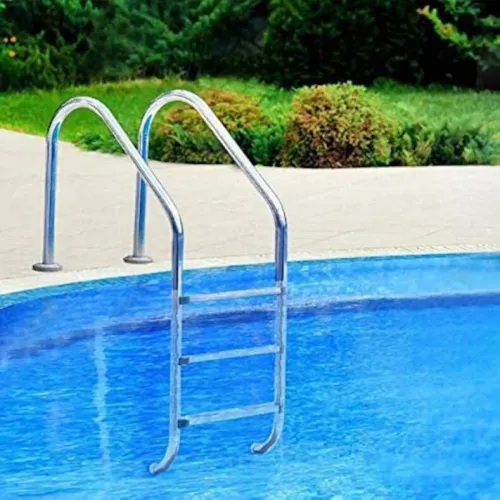
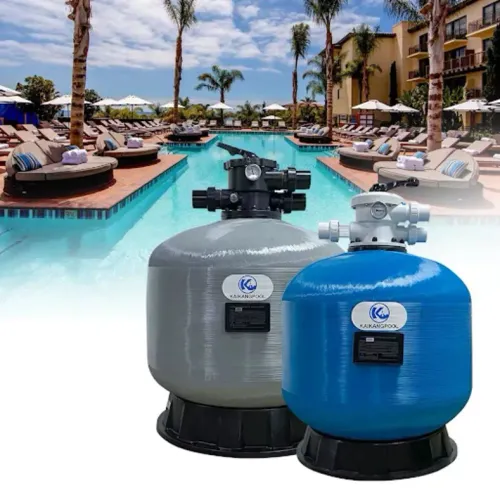
For a swimming pool or interactive-water feature, design turnover, filtration, disinfection, pH control, chemical storage and bather-load capacity as a health-protection system. Fountain hydraulics alone do not protect bathers.
Match Musical Cues to Effects and Their Physical Response
Vertical columns suit clean beat accents and repeated height patterns because small valves and short downstream water volumes respond quickly to musical fountain cues. Geyser effects need more flow and room, so reserve them for chorus hits or slower rises, not dense sixteenth-note timing.
| Effect | Best musical use | Physical response and risk |
|---|---|---|
| Vertical columns | Beats, repeated patterns | Fast response; use small valve-to-nozzle volume |
| Geyser effects | Chorus hits, slow rises | Strong punctuation; needs high flow and space |
| Foam effects | Entrances, bridges, static scenes | Sustained texture; poor for rapid modulation |
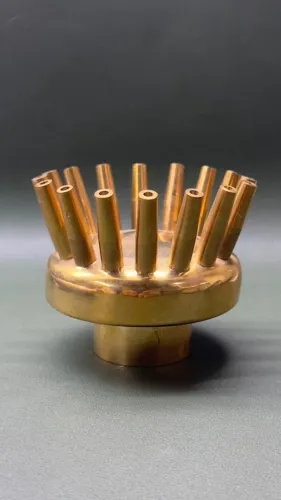
| Radial firework | Downbeats, scene reveals | Wide burst; wind distorts symmetry |
| Tiered effects | Layered builds, long transitions | Multiple levels settle at different times |
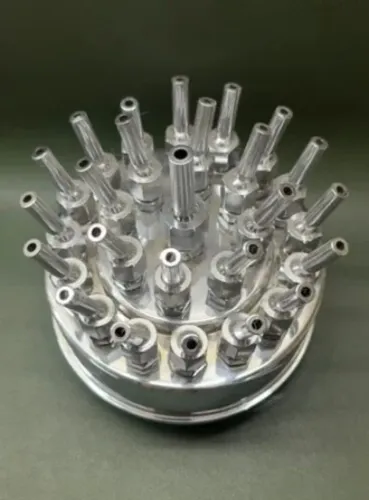
| Diamond patterns | Geometric scenes | Pressure changes and stream misalignment show clearly |
For each cue, measure valve response time, pump ramp time and downstream delay. Request repeatability at the programmed height, not merely a demonstration video. Treat wind, spray height, droplet size and nozzle angle as control inputs; a rain gun’s coarse droplets, rotation and drift rarely suit precise choreography.
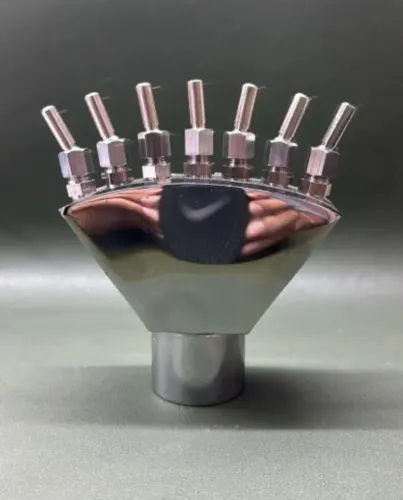
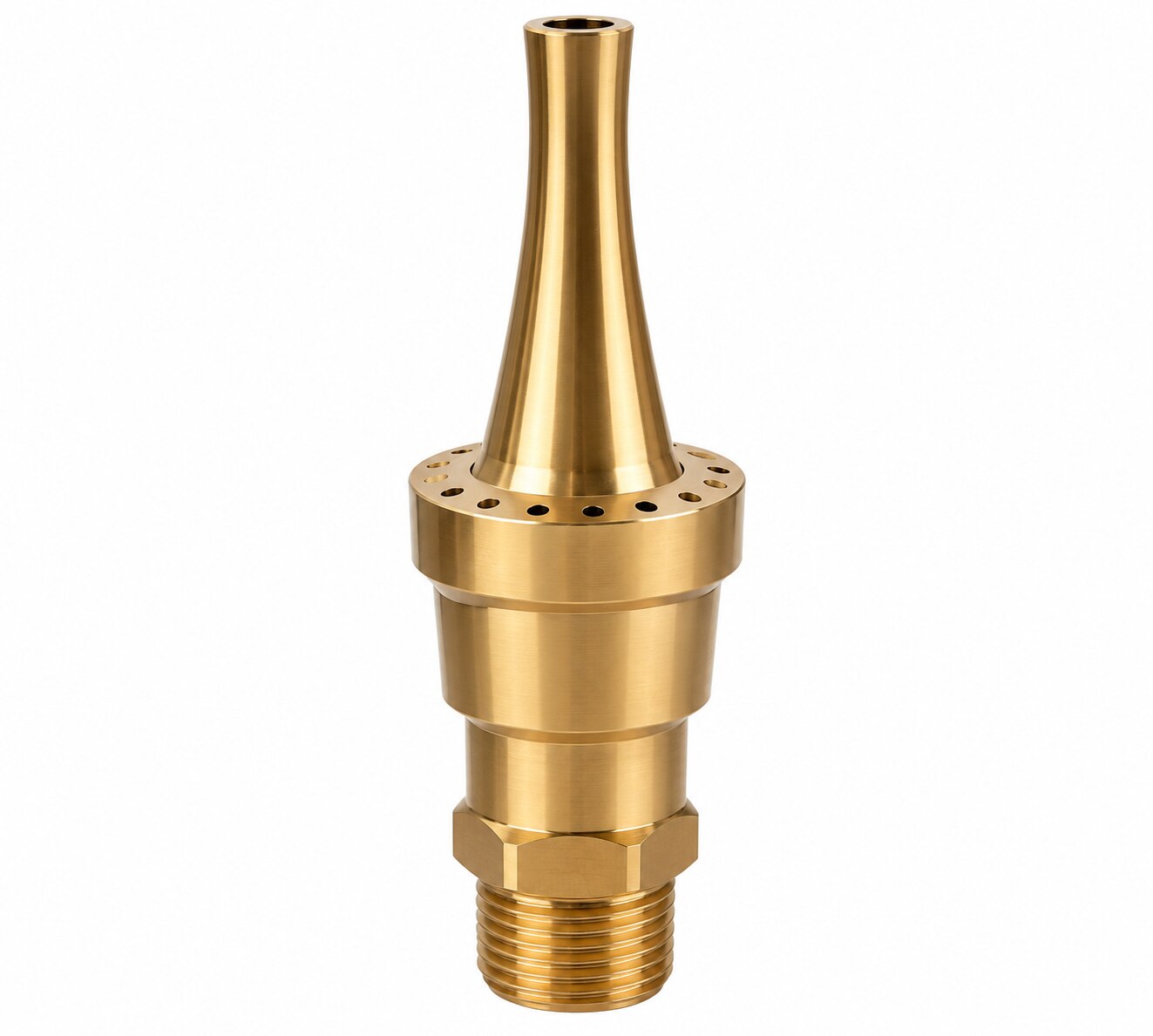
- For laminar or clear-arc nozzles, require the filtration rating, minimum straight-pipe length, recommended flow velocity, allowable pressure fluctuation and cleaning method.
- Test actual flow and pressure, height repeatability, lighting and control latency, leakage, sound level and fault recovery.
- Confirm whether the programmed effect remains stable when wind rises, pressure changes or the pump stops and restarts.
Size the Hydraulic System From the Operating Point
A nozzle works with an existing network only when its duty point matches the pump’s delivered performance after losses; a matching inlet diameter proves nothing. Collect the nozzle’s flow rate in litres per minute, operating pressure, spray height, throw radius, inlet size and allowable pressure range.
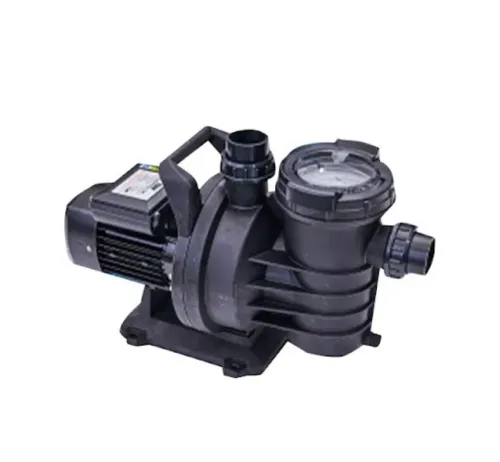
Calculate total dynamic head from static elevation, pipe and fitting friction, filtration losses, valve losses, nozzle pressure requirements and any change in water-feature elevation. Select the pump for the required flow at that head, then request a pump curve marking the duty point and efficiency.
- Compare that point with the existing pump curve, suction conditions, filter capacity, manifold, valve Cv, pipe diameter and controller limits.
- Separate hydraulic zones when effects need materially different flow rates or pressures. Throttling every branch from one oversized pump wastes energy and can make low-flow effects unstable.
- Use a variable-frequency drive for ramping, water-height control and energy reduction, not to compensate for an undersized pump, blocked filter, poor suction or insufficient nozzle pressure.
| Selection basis | What it proves | What it does not prove |
|---|---|---|
| Operating point | Required flow at total dynamic head | That every branch receives equal pressure |
| Maximum-flow headline | The pump’s best-case capacity | Performance at the installed duty point |
| Nozzle diameter | Physical connection size | Hydraulic compatibility |
For each effect, require the operating pressure, flow, control method, allowable pressure fluctuation and measured flow at each zone. For laminar or clear-arc nozzles, also obtain the filtration rating, minimum straight-pipe length, recommended flow velocity and cleaning method.
Specify Lights, Control Protocols and Safe Electrical Operation
Repeatable lighting starts with the stream: choose a narrow LED beam angle for a tight jet and a wider beam for a broad pattern. Specify colour mixing method, wattage, ingress-protection rating, mounting position, cable length, connector type and alignment with the nozzle stream.
| Option | Strength | Trade-off |
|---|---|---|
| Integrated nozzle-light assembly | Simplifies aiming and reduces alignment work | A failed light or nozzle may require replacing the combined assembly |
| Separate nozzle and submerged light | Allows independent replacement, aiming and fault isolation | Adds brackets, cable routing and alignment checks |
Define the control architecture, not merely “DMX compatible.” State whether the system uses DMX512, Art-Net or sACN, then record channel capacity, update rate, network topology, time synchronisation, fallback scene and the response to communication loss.
For wet locations, require residual-current or ground-fault protection, bonding and equipotential bonding, separate power and control circuits, wet-location wiring and restricted access to electrical equipment. Use connectors and cable glands rated for the installation environment, not indoor plug connections placed inside a wet chamber.
Document the safe state for each failure:
- Emergency stop: pumps and hazardous outputs stop.
- Pump trip or low-water input: affected valves close and restart requires a defined reset.
- High-wind input: wind-sensitive effects inhibit without creating an uncontrolled spray pattern.
- Network loss or power restoration: the system holds a safe scene; automatic restart occurs only after an intentional reset.
Compare Suppliers With Measured Tests and a Complete Specification
Choose a musical fountain equipment supplier by issuing every bidder the same performance brief, then comparing measured results rather than catalogue claims or demonstration videos. Include site dimensions, water chemistry, required scenes, cue timing, flow and pressure targets, wind limits, lighting positions, control protocol and maintenance access.
Require these documents before selection:
- A bill of materials listing corrosion resistance for every wetted component: nozzle and fastener grades or coatings, manifold and valve-body materials, pump components and submerged cable hardware. Chlorine, salt, low pH, stagnant zones and dissimilar metals can cause localised corrosion despite a “stainless steel” label.
- A factory-acceptance test plan and site-acceptance test plan with tolerances for zone flow and pressure, programmed-height repeatability, valve response, lighting and control latency, sound level, leakage and fault recovery.
- A maintenance schedule covering cleaning, service access, spare nozzles and lights, commissioning responsibility and as-built drawings.
Compare evidence, not presentation quality:
| Measure | Acceptable evidence | Why it matters |
|---|---|---|
| Flow and pressure | Readings at every zone against stated tolerances | A pump nameplate cannot prove nozzle performance |
| Control response | Timed valve, light and audio-cue results | Delays make choreography visibly late |
| Failure recovery | Defined safe states after faults | Automatic restart can restart danger |
Make the demonstration test DMX or network loss, emergency stop, pump trip, low water, high wind and power interruption. Samudra Industries deserves consideration only when its proposal supplies these engineering details for the specified fountain, pool or water-management equipment. A supplier earns confidence by documenting failure and maintenance behaviour, not its tallest jet.
Related products
 | Fountain Nozzle And Jet Nozzle 1 Inch Firework Fountain Nozzle Samudra Industries Create a spectacular and dynamic water display with the 1 Inch Firework Fountain Nozzle from Samudra Industries. View product → |
 | Fountain Nozzle And Jet Nozzle 3/8 Inch Rain Dance Fountain Nozzle 1 Inch Diamond Cluster Fountain Nozzle – Samudra Industries Create a striking and dynamic water display with the 1 Inch Diamond Cluster Fountain... View product → |
Frequently asked questions
What site details should you record before selecting fountain equipment?
Record basin dimensions, water depth, pool geometry, audience sightlines, viewing distance, prevailing wind direction, nearby structures, equipment-room location, drainage, make-up-water connection, filtration access, cable paths and maintenance access.
How do musical cues affect fountain equipment selection?
Match each musical cue to an effect’s response time, height, arc, width and shutoff behaviour so the water movement follows the score rather than lagging behind it.
How do you size a fountain hydraulic system?
Size it from the operating point: the required flow and pressure at the nozzles after accounting for elevation, pipe friction, fittings, filters and other system losses.
What should you compare when choosing a musical fountain equipment supplier?
Compare measured flow and pressure tests, nozzle performance, pump and control specifications, lighting details, communication protocols, electrical safety documentation and the completeness of the installation specification.
Related products
 | Fountain Nozzle And Jet Nozzle 2.5 Inch 3 Stage Fountain Nozzle Samudra Industries Create stunning multi-layered water displays with the 2.5 Inch 3 Stage Fountain Nozzle from Samudra Industries. View product → |
 | Swiming Pool Lights And Fountain Lights 1.50"Inch Diamond Nozzle Led Light 1.5 Inch Diamond Nozzle LED Light – Samudra Industries Add brilliance and elegance to your fountain displays with the 1.5 Inch Diamond Nozzle LED... View product → |
 | Fountain Nozzle And Jet Nozzle Samudra Industries Create a bold and visually striking water display with the 1.5 Inch Foaming Nozzle from Samudra Industries. View product → |
 | Fountain Nozzle And Jet Nozzle 1.5 Inch Geyser Fountain Nozzle ₹1550 Samudra Industries Create a powerful and high-impact water display with the 1.5 Inch Geyser Fountain Nozzle from Samudra Industries. View product → |