A dealer’s catalogue does not prove that its equipment will work together in your pool. Before requesting prices, define the hydraulic, structural, electrical and maintenance requirements, then demand documents that let you compare complete systems rather than isolated products.
Key takeaways
- Request a complete equipment schedule with model numbers, quantities and installation responsibilities.
- Check pump flow, filter capacity and head loss against the pool’s actual dimensions.
- Confirm drainage, lighting, safety and water-treatment components work as one system.
- Compare commissioning, warranties, spare parts and service response—not only the quoted price.
Confirm the dealer can design and document a complete package
Before requesting a quotation, verify that the swimming pool accessories dealer can engineer and document the entire new pool project, not merely price a pump and filter. Ask for a complete pool equipment package with compatible components, quantities, model numbers and installation responsibilities.
1. Request dealer submittal documents showing the design flow, total dynamic head, static lift, pipe sizes, friction losses, filter and heat-exchanger losses, and the selected operating point on the manufacturer’s pump curve. Reject sizing based only on motor horsepower or nominal pipe diameter.
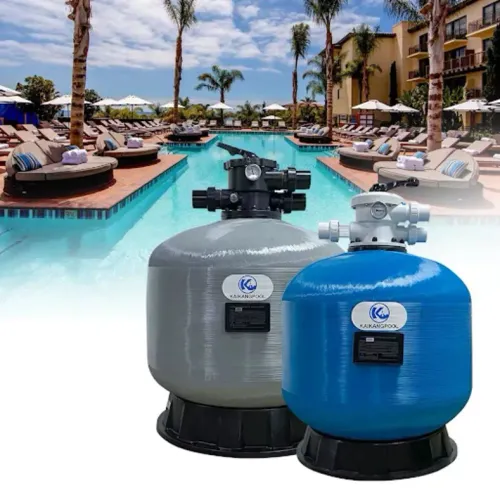
2. Require filtration details: filter area, media or cartridge type, design loading rate, clean and dirty pressure limits, backwash flow, waste-line capacity and the required water source. A filter that cannot discharge its backwash flow is unusable, regardless of its tank size.
3. Check the electrical package, not just the motor. Obtain each item’s listing, installation instructions, bonding and disconnect requirements, cord length, wet-location rating and compatibility with the project’s residual-current or GFCI protection. NEC Article 680 applies to many permanent pool installations, but the adopted local edition and amendments control.
4. For a commercial or public pool, ask which jurisdictional approvals apply and request evidence, such as NSF/ANSI/CAN 50 certification where required. “Pool grade” is not a certification.
5. Confirm the package includes chemical-feed controls, measurable disinfectant-residual targets, sensor calibration instructions, isolation valves, unions and maintenance access. The quotation should identify who supplies, installs, commissions and warranties every item.
Check pump and filter sizing against the real system
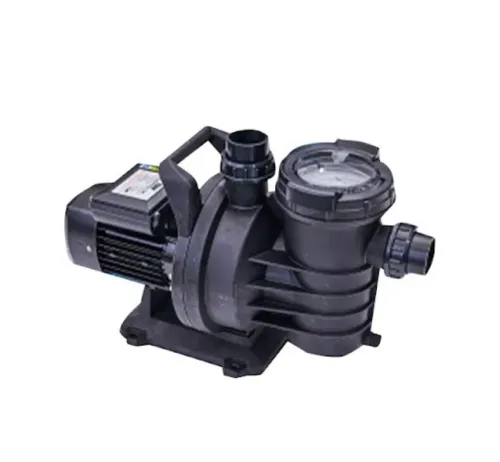
A credible pool pump sizing proposal starts with a documented system curve, not motor horsepower or nominal pipe diameter. Ask for design flow, total dynamic head, static lift, pipe-friction losses, filter and heat-exchanger losses, and the selected operating point on the manufacturer’s pump curve.
Check that flow meets the required pool turnover rate: pool volume divided by the target turnover time. An oversized pump wastes electricity and can create high velocity, noise, unstable controls and operation away from its best-efficiency point.
- Match the pump’s duty point to the installed pipework, filter, heater, valves and fittings. A catalogue flow figure at zero head proves nothing about performance in your completed system.
- For a variable-speed pump, obtain guaranteed flow points and the minimum speed needed for heater flow switches, salt-cell detection, chemical-feed interlocks, skimmer action and turnover. Low speed can trigger faults even when maximum speed looks adequate.
- Require the filter’s actual design loading rate, media or cartridge type, design flow, clean and dirty pressure limits, backwash flow and waste-disposal requirements. Confirm that the backwash line and water source can handle the instantaneous discharge.
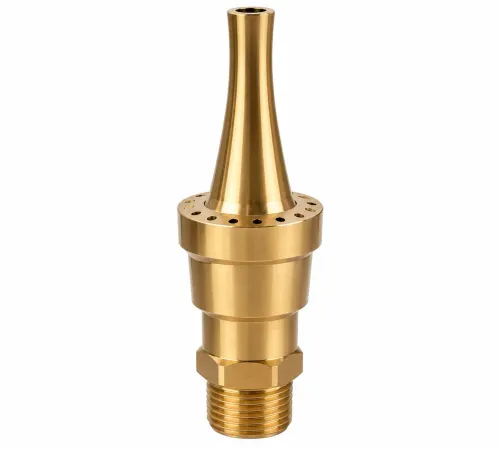
- If the same supplier proposes irrigation rain guns, demand a separate duty schedule covering nozzle diameter, gun pressure, discharge rate, wetted radius, wind conditions, rotation range, filtration and allowable pressure fluctuation. Pool-pump data is not an irrigation design.
Inspect the physical, drainage and lighting specifications
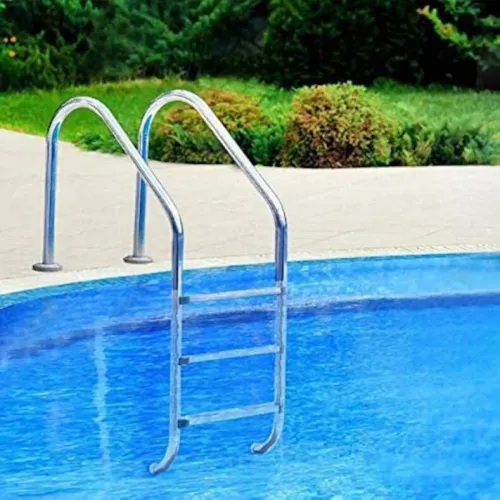
The dealer must confirm each item’s dimensions, structural rating and installation details before you approve the pool layout. A visual match is not enough: poor pool ladder fit can obstruct coping, undersized overflow grating can restrict drainage, and an unsuitable light assembly can create shock or maintenance risks.
| Item | Confirm | What failure looks like |
|---|---|---|
| Pool ladder | Overall width, reach, anchor spacing, tube diameter, material, deck thickness and rated user load | Loose anchors, damaged coping or a ladder that clashes with the pool wall |
| Overflow grating | Channel width and depth, grate module length, opening size, load rating, slope and drainage capacity | Broken sections, standing water or a trip hazard at the pool edge |
| Pool light | Cut-out or niche diameter and depth, cable length, voltage, wattage, transformer output, junction-box position and pool light IP rating | Water ingress, excessive voltage drop or a light that cannot be replaced without draining |
For overflow grating, ask for the material grade and chemical and ultraviolet resistance, not just “heavy duty.” Confirm how sections lift out for cleaning and whether the channel accepts the specified flow without backing up onto the deck.
For underwater pool lighting, obtain the complete assembly’s wet-location and submersion listing, cable glands, bonding method and compatibility with residual-current or GFCI protection. Request installation instructions, disconnect requirements and transformer details; an IP-rated luminaire does not make an improvised splice compliant.
The dealer should identify maintenance access, replacement light modules and safe cable routes. Confirm the adopted local electrical rules, including applicable NEC Article 680 requirements, before installation.
Verify safety, water treatment and control compatibility
The evidence is a file of listings, installation instructions, material data and control diagrams—not a promise that equipment is “pool grade.” For every suction outlet, drain and vacuum fitting, request documentation for the applicable anti-entrapment drain covers, including ANSI/APSP/ICC-16 where that standard governs.
Public and commercial projects in the United States also require a check against the Virginia Graeme Baker Pool and Spa Safety Act.
For commercial or public pools, ask for the required listing or certification for each applicable component under NSF/ANSI/CAN 50. Confirm the adopted local electrical rules, then obtain the equipment listing, bonding and disconnect requirements, wet-location rating, cord length and compatibility with GFCI or residual-current protection.
Treat pool electrical safety as a system issue, not just a pump-motor label.
Request these compatibility records before approving the quotation:
- A wetted-material schedule covering stainless-steel grades, plastics, elastomers, seals, check valves and heat-exchanger metallurgy for salt chlorination, low-pH dosing, ozone, acid injection and heated water.
- A chemical dosing system schedule stating disinfectant residual targets, pH range, sensor-calibration intervals, feed interlocks and alarm responses. UV or ozone must not replace a measurable chlorine or bromine residual.
- A controls diagram identifying dry contacts, analog or digital signals, sensor types, actuator fail positions, alarm outputs, remote-access dependencies and power-loss behavior.
If the dealer cannot show how pumps, heaters, salt cells and controllers exchange signals, the package is not yet proven compatible.
Compare quotations, commissioning support and long-term service
Compare totals only after matching each line item by model number, quantity, material grade, dimensions, flow, head, voltage, wattage, filter area, pipe size, taxes and delivery. Ask for separate prices for installation, testing, freight, controls and civil or electrical work; a low lump sum often hides exclusions.
| Check | Quote must show | Reject or clarify when |
|---|---|---|
| Equipment identity | Manufacturer, model, quantity and material grade | It says “equivalent” without a named substitute |
| Performance | Pump curve, filter loading rate, media or cartridge, clean and dirty pressure limits, backwash flow and waste-line requirement | It quotes only motor power or filter area |
| Installation | Pipe sizes, controls, electrical scope, taxes, delivery and commissioning | Wiring, valves or testing are excluded |
| Aftercare | Warranty start date, exclusions, spare-parts availability and response time | Proprietary replacements have no defined supply path |
Make pool equipment commissioning a documented deliverable. Require measured flow, pressure, motor current, filter pressure, backwash discharge, alarm operation and operator training in the handover record.
Check the electrical package for listing, installation instructions, bonding, disconnect, cord length, wet-location rating and compatibility with the project’s GFCI or residual-current protection under NEC Article 680 and local amendments.
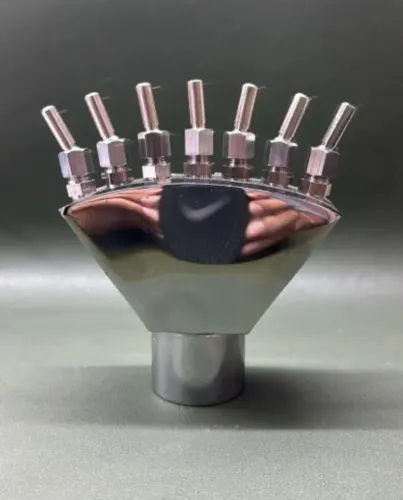
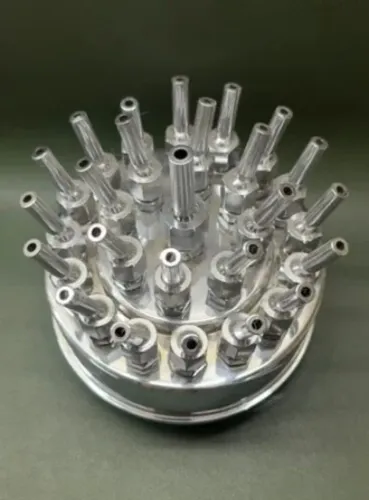
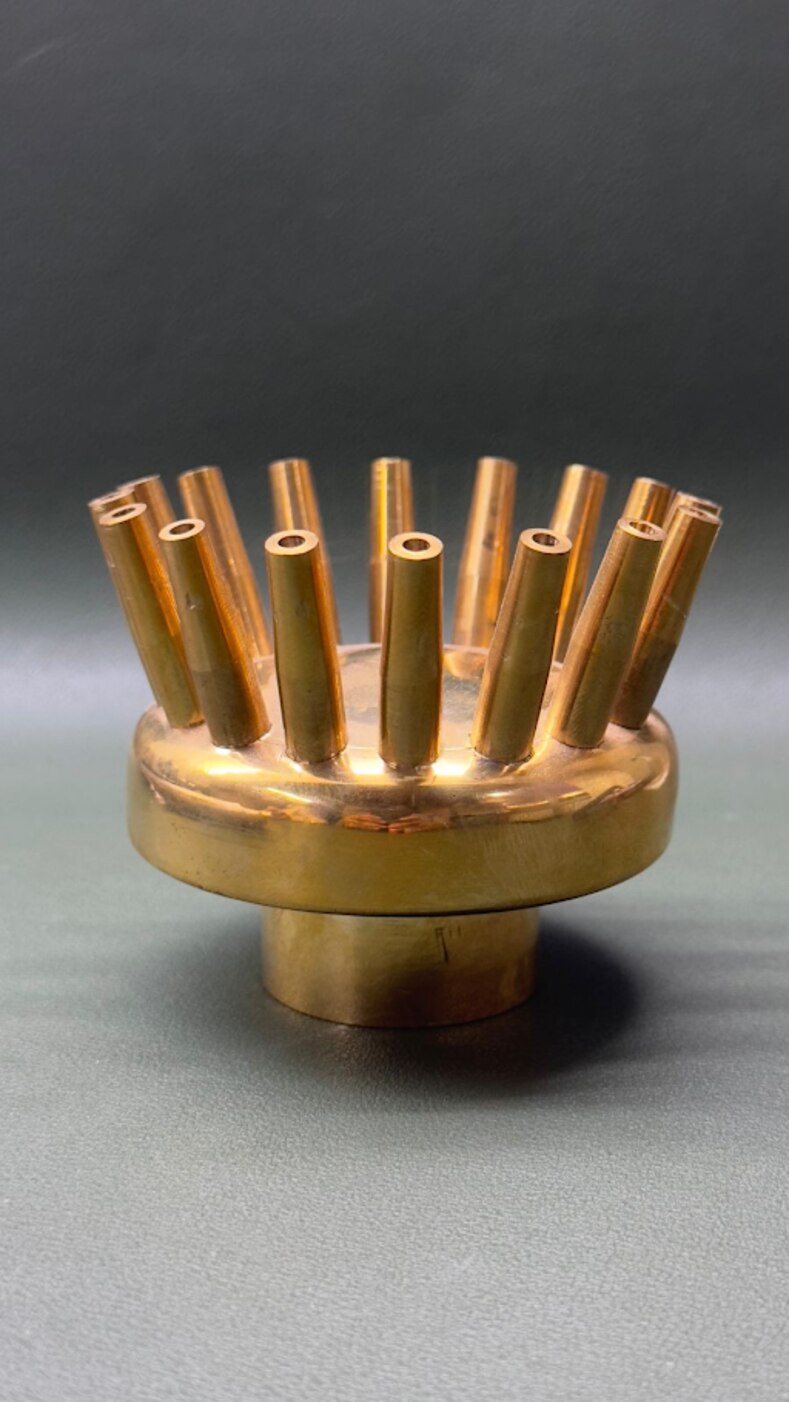
For fountain and irrigation equipment, demand a separate duty schedule. It should state nozzle diameter, pressure at the rain gun, discharge, wetted radius under stated wind conditions and allowable pressure fluctuation.
Whether the quote comes from Samudra Industries or another dealer, inspect access to strainers, isolation valves, unions, light modules, nozzles and lifting points before accepting the design. Get a written warranty and spare parts schedule covering seals, sensors, filter elements, salt cells, light modules and control boards.
Related products
 | Swimming Pool Products Samudra Industries is a trusted supplier of premium-quality Pool Accessories designed to enhance the functionality, safety, cleanliness, and... View product → |
 | Swimming Pool Products Samudra Industries offers premium-quality Pool Ladders designed for safe, comfortable, and convenient access to swimming pools. View product → |
Frequently asked questions
What documents should a swimming pool accessories dealer provide?
Ask for a complete equipment schedule listing compatible components, quantities, model numbers, installation responsibilities and operating requirements.
How do you check whether pool pumps and filters are correctly sized?
Compare the proposed pump flow and filter capacity with pool volume, turnover target, pipe diameter, fittings, elevation and total dynamic head.
Which physical, drainage and lighting details should you verify?
Check equipment-room access, pipe routes, floor drains, backwash discharge, electrical provisions, light locations, cable protection and waterproofing details.
What should you compare beyond the equipment quotation?
Compare commissioning, operator training, warranty terms, spare-parts access, fault-response times and who remains responsible after installation.
Related products
 | Swimming Pool Products # Cleaning Kit Samudra Industries offers high-quality **Cleaning Kits** designed for effective maintenance and cleaning of swimming pools, fountains,... View product → |
 | Swimming Pool Products Samudra Industries offers high-performance Pool Pumps designed for efficient water circulation, filtration, and maintenance in swimming pools,... View product → |
 | Swimming Pool Products Samudra Industries offers premium-quality Swimming Pool Filters designed to maintain clean, hygienic, and crystal-clear pool water for residential,... View product → |
 | Swimming Pool Products Samudra Industries is a trusted supplier of premium-quality Overflow Grating designed for efficient water drainage and safety in swimming pools,... View product → |